


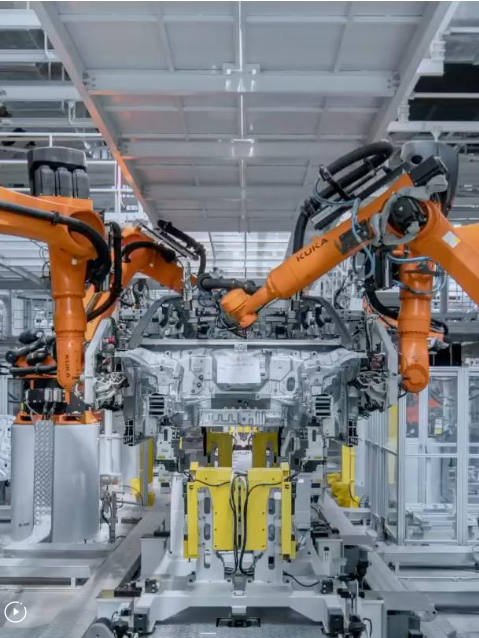
* As of 2024, China's manufacturing sector has been the world's largest for 15 consecutive years, growing steadily at home while continuing to attract foreign investment.
* Building on a well-established industrial base, Chinese industry has gradually moved from producing mainly low-value goods such as shoes, garments and basic consumer products to a broader range of high-value, technology-intensive products, including electric vehicles, energy storage systems, and advanced industrial robots.
* As China's manufacturing capabilities are moving up the value chain, multinational companies are increasingly viewing the country not only as a production base or consumer market, but also as a platform for research, rapid application and technology iteration.
BEIJING, Jan. 10 (Xinhua) -- Earlier in December, the world's leading electric vehicle battery maker Contemporary Amperex Technology Co. (CATL) said it is nearing completion on what could be one of Europe's largest electric vehicle battery factories, a fresh example of advanced Chinese manufacturing gaining international recognition.
Over the years, China's manufacturing sector has steadily upgraded and integrated itself into international industrial networks. With a growing focus on high-tech and clean-energy production, it now provides robust manufacturing capabilities and supports more resilient supply chains, creating opportunities for global partnerships in emerging industries.
WHY MADE IN CHINA?
As of 2024, China's manufacturing sector has been the world's largest for 15 consecutive years, growing steadily at home while continuing to attract foreign investment.
In the first 11 months of 2025, China attracted 693.18 billion yuan (about 98.25 billion U.S. dollars) in actual foreign direct investment, with manufacturing alone receiving 171.72 billion yuan (around 24.4 billion dollars), roughly one-quarter of the total.
But why China? How has its manufacturing sector grown from a modest industrial base into a vast, interconnected system deeply embedded in global production networks within decades?
The answer may be glimpsed in more than 40 years of reform and opening-up, which allowed the country to engage in labor-intensive manufacturing for multinational companies. The accession to the World Trade Organization in 2001 further opened the door for the country to emerge as a major hub for processing and manufacturing.
Supported by plentiful labor resources, strong infrastructure, and favorable policies, China's manufacturing sector grew at an average annual rate of 12 percent between 1995 and 2015, and since then gradually built broad industrial capabilities across sectors such as automotive, machinery, medical devices, and consumer electronics.
These structural advantages have long attracted global manufacturers, including Michelin, which has steadily expanded its operations in China.
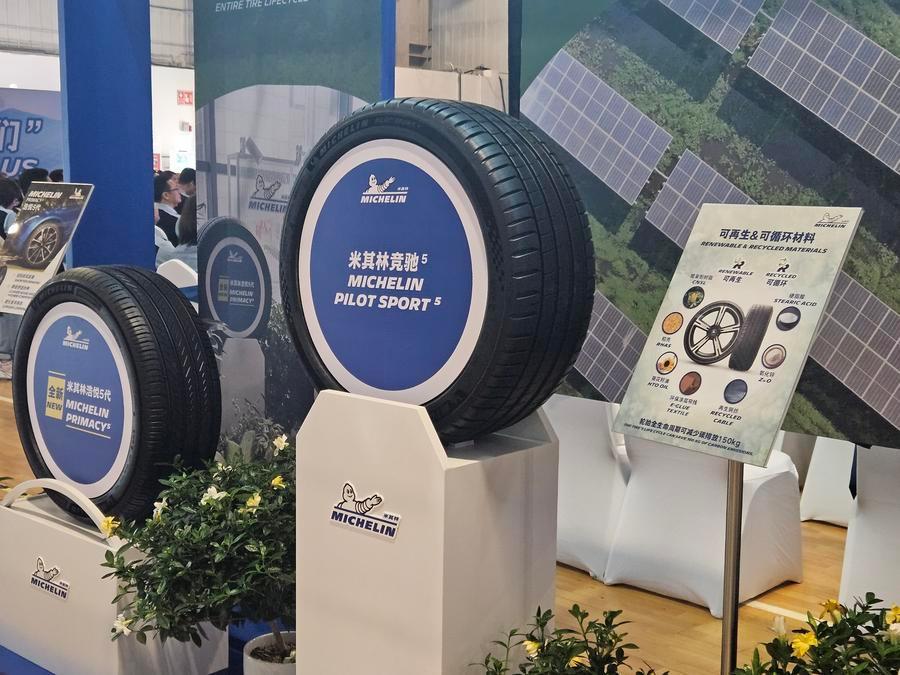
This photo taken on Sept. 24, 2025 shows products on display at the 30th anniversary ceremony of Michelin Shenyang Tire Company Ltd. in Shenyang, northeast China's Liaoning Province. (Xinhua/Yu Yetong)
In September, Michelin celebrated the 30th anniversary of its Shenyang plant -- the group's first factory in China and now its largest and most advanced high-end tire manufacturing base in the world.
Established in 1995 as a joint venture, the plant has expanded steadily, with new production lines added in 2010 and 2018, advanced silent tire lines introduced in 2019, and a 40-million-euro (about 43-million-dollar) investment in 2024 to further raise capacity.
"Michelin Shenyang is a milestone for Michelin in China," said Matthew Ye, president and CEO of Michelin Greater China & Mongolia, noting "the plant's success vividly embodies the deep integration of the Michelin spirit with the Chinese market."
"The Chinese market remains one of the most dynamic and promising for Michelin globally, featuring not only a vast consumer base and a rapidly upgrading automotive industry, but also an increasingly robust supply chain and a continuously improving business environment," said Ye, highlighting the wider attractiveness of China's industrial ecosystem.
INTELLIGENT MANUFACTURING IN CHINA
Building on a well-established industrial base, Chinese industry has gradually moved from producing mainly low-value goods such as shoes, garments and basic consumer products to a broader range of high-value, technology-intensive products, including electric vehicles, energy storage systems, and advanced industrial robots.
The year 2024 is a good example: Value added by high-tech manufacturing firms above a designated scale was 42 percent higher than in 2020, with clean energy-related production forming a key part of this growth.
This transition has been accompanied by the rapid spread of intelligent manufacturing across China's industrial sector, now spanning tens of thousands of factories and production facilities nationwide.
At GAC Aion's Guangzhou plant, robotic arms work almost non-stop along assembly lines, producing a vehicle every 53 seconds in a "dark factory" where lights are rarely needed. Similar facilities are now emerging across China, with the country accounting for more than half of the world's newly installed industrial robots in 2024, according to the International Federation of Robotics.
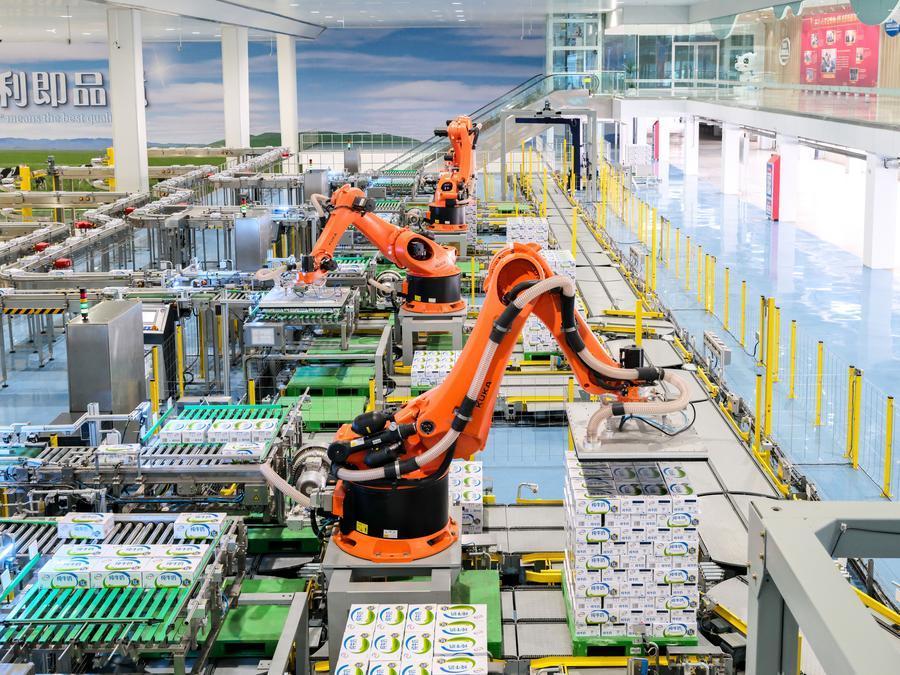
Robotic arms carry out packaging operation at the Global Intelligent Manufacturing Industrial Park of Yili Modern Intelligent Health Valley in Tumd Left Banner in Hohhot, north China's Inner Mongolia Autonomous Region, April 17, 2025. (Xinhua/Ma Jinrui)
China's fully integrated industrial system places it in a unique position within the global supply chain landscape, said Yin Zheng, executive vice president of Schneider Electric's China & East Asia Operations.
"What the industry needs now are supply chains that are not only efficient but also resilient and green, a view that is increasingly shared across sectors," Yin said.
SHARED OPPORTUNITIES FOR FUTURE
As China's manufacturing capabilities are moving up the value chain, multinational companies are increasingly viewing the country not only as a production base or consumer market, but also as a platform for research, rapid application and technology iteration.
Speaking to Xinhua at the 2025 International Motor Show Germany in Munich, Oliver Zipse, chairman of the board of management of BMW AG, said China's innovation is crucial for BMW's global strategy.
"The combination of German engineering expertise with China's extensive supplier network and local innovation creates a unique global advantage," Zipse said.
Upgrades in China's manufacturing sector are also reshaping opportunities in the global energy transition. As climate targets tighten and the window for cutting emissions narrows, the pace, scale and affordability of clean-energy deployment have become central concerns for governments and industries worldwide.
The U.S. academic journal Science named the renewable energy surge as the 2025 Breakthrough of the Year, noting that China's mighty industrial engine is the driver.
Quoting Britain-based Carbon Brief, it said solar panels, batteries, electric vehicles and wind turbines exported from China in 2024 are set to cut annual CO2 emissions in the rest of the world by 1 percent.
Beyond delivering cost-effective green products at scale, China's manufacturing upgrades are creating practical entry points for international collaboration in green technology.
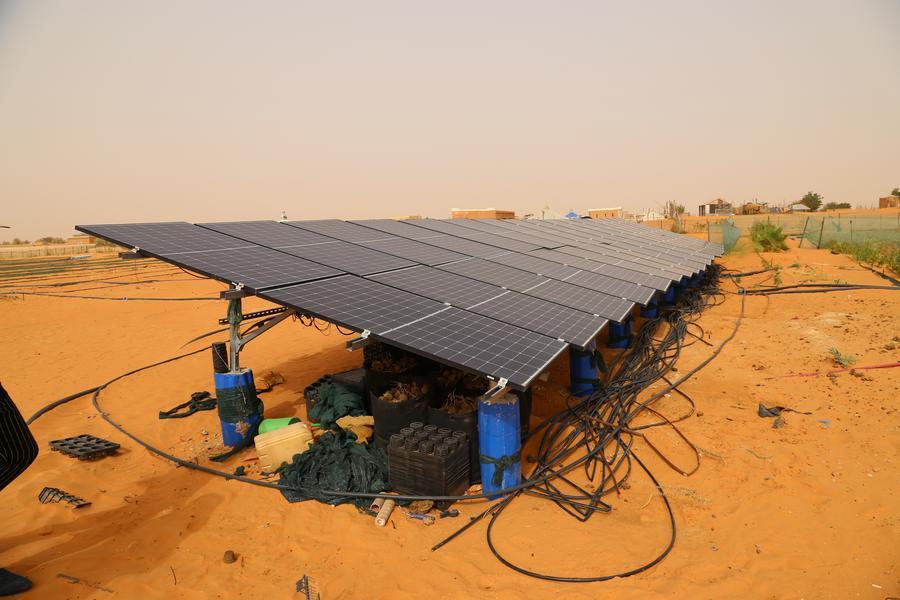
Photo taken on May 22, 2025 shows solar panels in the China-Africa Green Technology Park in Bir El Barka, Trarza region, western Mauritania. (Xinhua/Si Yuan)
Chinese firms have pledged roughly 200 billion dollars in overseas clean energy investments since 2022, reported The Wired in December, noting that this is "beginning to narrow the gap in funding needed to slash the world's climate pollution."
With rising global demand for low-carbon technologies and the urgent need to accelerate the energy transition, Chinese manufacturers are increasingly embedding themselves in overseas industrial ecosystems, extending collaboration across production, technology, talent, and industrial capacity.
In Uzbekistan, Chinese photovoltaic giant LONGi partnered with international firms to develop Central Asia's first large-scale green hydrogen project, which is expected to cut about 30,000 tons of carbon dioxide emissions each year compared with traditional hydrogen production models.
"Our cooperation model connects China's technology with local energy strategies," said Zhang Wenyin, head of strategy and marketing at LONGi Hydrogen. "It also helps partner countries cultivate local talent and industrial capacity."
FORGING AHEAD ON GREEN TRANSITION
China has stayed on course in advancing the green transition despite policy shifts in some Western countries. Several major economies, including the United States and the European Union, have recently revised automotive policies, easing rules for conventional vehicles.
In the United States, this came after the federal electric-vehicle tax credit expired in September, with a late-2025 proposal to slash Corporate Average Fuel Economy standards. Meanwhile, the European Commission announced plans to drop its effective ban on new combustion-engine cars from 2035, marking a notable retreat from its green policies.
These moves, while giving conventional vehicles more policy flexibility during the transition period, have also posed challenges for advancing green transition goals in these markets.
Amid signs of slowing and recalibrating parts of the global green transition, Chinese green manufacturing companies continue to deliver more clean-energy products to global markets.
In September, Chinese automaker BYD saw its 1,000th electric bus roll off the production line at its Hungarian bus factory, and it plans to expand the bus factory with an additional 29,000 square meters of production facilities to further increase annual capacity for electric buses and trucks.
Since delivering its first European order in 2013, more than 5,000 BYD electric buses have been deployed across over 160 cities in 26 European countries.
China's progress in green manufacturing should be seen not as a threat, but as an opportunity -- one that calls for deeper dialogue, joint innovation and mutually beneficial cooperation between Europe and China in pursuit of global climate goals, Kauppalehti, a Finnish business daily, said in an article.
(Video reporters: Zhang Yuqi, Hu Zhenze, Li Hanlin, Hu Xiaoming, Tai Sicong, He Xiyue, Bai Bin; video editors: Hong Liang, Liu Xiaorui)■
* As of 2024, China's manufacturing sector has been the world's largest for 15 consecutive years, growing steadily at home while continuing to attract foreign investment.
* Building on a well-established industrial base, Chinese industry has gradually moved from producing mainly low-value goods such as shoes, garments and basic consumer products to a broader range of high-value, technology-intensive products, including electric vehicles, energy storage systems, and advanced industrial robots.
* As China's manufacturing capabilities are moving up the value chain, multinational companies are increasingly viewing the country not only as a production base or consumer market, but also as a platform for research, rapid application and technology iteration.
BEIJING, Jan. 10 (Xinhua) -- Earlier in December, the world's leading electric vehicle battery maker Contemporary Amperex Technology Co. (CATL) said it is nearing completion on what could be one of Europe's largest electric vehicle battery factories, a fresh example of advanced Chinese manufacturing gaining international recognition.
Over the years, China's manufacturing sector has steadily upgraded and integrated itself into international industrial networks. With a growing focus on high-tech and clean-energy production, it now provides robust manufacturing capabilities and supports more resilient supply chains, creating opportunities for global partnerships in emerging industries.
WHY MADE IN CHINA?
As of 2024, China's manufacturing sector has been the world's largest for 15 consecutive years, growing steadily at home while continuing to attract foreign investment.
In the first 11 months of 2025, China attracted 693.18 billion yuan (about 98.25 billion U.S. dollars) in actual foreign direct investment, with manufacturing alone receiving 171.72 billion yuan (around 24.4 billion dollars), roughly one-quarter of the total.
But why China? How has its manufacturing sector grown from a modest industrial base into a vast, interconnected system deeply embedded in global production networks within decades?
The answer may be glimpsed in more than 40 years of reform and opening-up, which allowed the country to engage in labor-intensive manufacturing for multinational companies. The accession to the World Trade Organization in 2001 further opened the door for the country to emerge as a major hub for processing and manufacturing.
Supported by plentiful labor resources, strong infrastructure, and favorable policies, China's manufacturing sector grew at an average annual rate of 12 percent between 1995 and 2015, and since then gradually built broad industrial capabilities across sectors such as automotive, machinery, medical devices, and consumer electronics.
These structural advantages have long attracted global manufacturers, including Michelin, which has steadily expanded its operations in China.

This photo taken on Sept. 24, 2025 shows products on display at the 30th anniversary ceremony of Michelin Shenyang Tire Company Ltd. in Shenyang, northeast China's Liaoning Province. (Xinhua/Yu Yetong)
In September, Michelin celebrated the 30th anniversary of its Shenyang plant -- the group's first factory in China and now its largest and most advanced high-end tire manufacturing base in the world.
Established in 1995 as a joint venture, the plant has expanded steadily, with new production lines added in 2010 and 2018, advanced silent tire lines introduced in 2019, and a 40-million-euro (about 43-million-dollar) investment in 2024 to further raise capacity.
"Michelin Shenyang is a milestone for Michelin in China," said Matthew Ye, president and CEO of Michelin Greater China & Mongolia, noting "the plant's success vividly embodies the deep integration of the Michelin spirit with the Chinese market."
"The Chinese market remains one of the most dynamic and promising for Michelin globally, featuring not only a vast consumer base and a rapidly upgrading automotive industry, but also an increasingly robust supply chain and a continuously improving business environment," said Ye, highlighting the wider attractiveness of China's industrial ecosystem.
INTELLIGENT MANUFACTURING IN CHINA
Building on a well-established industrial base, Chinese industry has gradually moved from producing mainly low-value goods such as shoes, garments and basic consumer products to a broader range of high-value, technology-intensive products, including electric vehicles, energy storage systems, and advanced industrial robots.
The year 2024 is a good example: Value added by high-tech manufacturing firms above a designated scale was 42 percent higher than in 2020, with clean energy-related production forming a key part of this growth.
This transition has been accompanied by the rapid spread of intelligent manufacturing across China's industrial sector, now spanning tens of thousands of factories and production facilities nationwide.
At GAC Aion's Guangzhou plant, robotic arms work almost non-stop along assembly lines, producing a vehicle every 53 seconds in a "dark factory" where lights are rarely needed. Similar facilities are now emerging across China, with the country accounting for more than half of the world's newly installed industrial robots in 2024, according to the International Federation of Robotics.
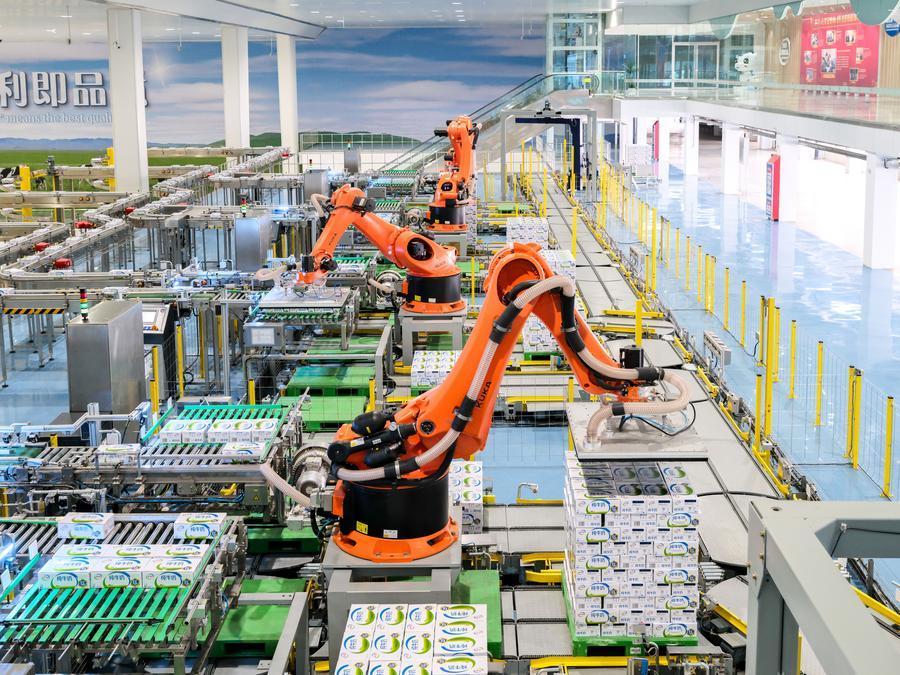
Robotic arms carry out packaging operation at the Global Intelligent Manufacturing Industrial Park of Yili Modern Intelligent Health Valley in Tumd Left Banner in Hohhot, north China's Inner Mongolia Autonomous Region, April 17, 2025. (Xinhua/Ma Jinrui)
China's fully integrated industrial system places it in a unique position within the global supply chain landscape, said Yin Zheng, executive vice president of Schneider Electric's China & East Asia Operations.
"What the industry needs now are supply chains that are not only efficient but also resilient and green, a view that is increasingly shared across sectors," Yin said.
SHARED OPPORTUNITIES FOR FUTURE
As China's manufacturing capabilities are moving up the value chain, multinational companies are increasingly viewing the country not only as a production base or consumer market, but also as a platform for research, rapid application and technology iteration.
Speaking to Xinhua at the 2025 International Motor Show Germany in Munich, Oliver Zipse, chairman of the board of management of BMW AG, said China's innovation is crucial for BMW's global strategy.
"The combination of German engineering expertise with China's extensive supplier network and local innovation creates a unique global advantage," Zipse said.
Upgrades in China's manufacturing sector are also reshaping opportunities in the global energy transition. As climate targets tighten and the window for cutting emissions narrows, the pace, scale and affordability of clean-energy deployment have become central concerns for governments and industries worldwide.
The U.S. academic journal Science named the renewable energy surge as the 2025 Breakthrough of the Year, noting that China's mighty industrial engine is the driver.
Quoting Britain-based Carbon Brief, it said solar panels, batteries, electric vehicles and wind turbines exported from China in 2024 are set to cut annual CO2 emissions in the rest of the world by 1 percent.
Beyond delivering cost-effective green products at scale, China's manufacturing upgrades are creating practical entry points for international collaboration in green technology.
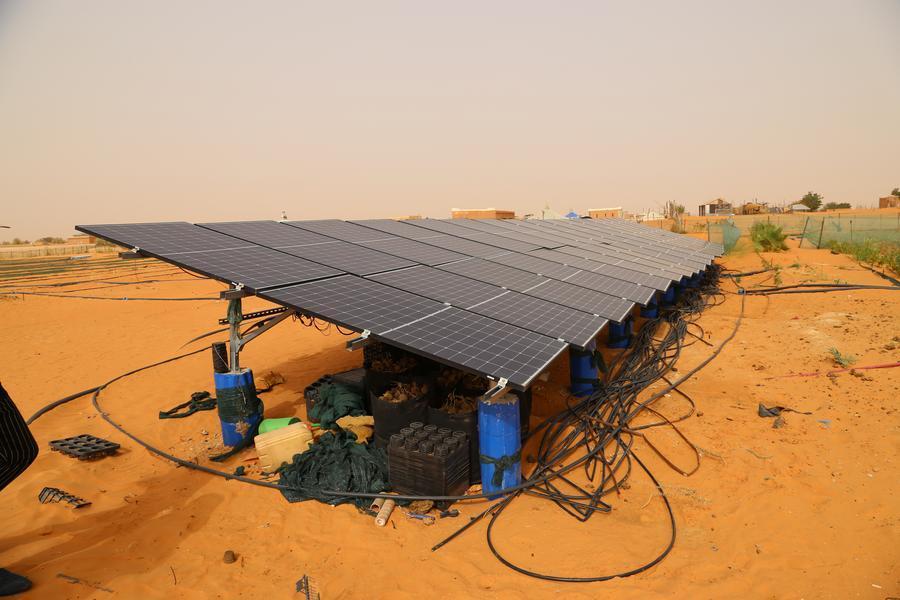
Photo taken on May 22, 2025 shows solar panels in the China-Africa Green Technology Park in Bir El Barka, Trarza region, western Mauritania. (Xinhua/Si Yuan)
Chinese firms have pledged roughly 200 billion dollars in overseas clean energy investments since 2022, reported The Wired in December, noting that this is "beginning to narrow the gap in funding needed to slash the world's climate pollution."
With rising global demand for low-carbon technologies and the urgent need to accelerate the energy transition, Chinese manufacturers are increasingly embedding themselves in overseas industrial ecosystems, extending collaboration across production, technology, talent, and industrial capacity.
In Uzbekistan, Chinese photovoltaic giant LONGi partnered with international firms to develop Central Asia's first large-scale green hydrogen project, which is expected to cut about 30,000 tons of carbon dioxide emissions each year compared with traditional hydrogen production models.
"Our cooperation model connects China's technology with local energy strategies," said Zhang Wenyin, head of strategy and marketing at LONGi Hydrogen. "It also helps partner countries cultivate local talent and industrial capacity."
FORGING AHEAD ON GREEN TRANSITION
China has stayed on course in advancing the green transition despite policy shifts in some Western countries. Several major economies, including the United States and the European Union, have recently revised automotive policies, easing rules for conventional vehicles.
In the United States, this came after the federal electric-vehicle tax credit expired in September, with a late-2025 proposal to slash Corporate Average Fuel Economy standards. Meanwhile, the European Commission announced plans to drop its effective ban on new combustion-engine cars from 2035, marking a notable retreat from its green policies.
These moves, while giving conventional vehicles more policy flexibility during the transition period, have also posed challenges for advancing green transition goals in these markets.
Amid signs of slowing and recalibrating parts of the global green transition, Chinese green manufacturing companies continue to deliver more clean-energy products to global markets.
In September, Chinese automaker BYD saw its 1,000th electric bus roll off the production line at its Hungarian bus factory, and it plans to expand the bus factory with an additional 29,000 square meters of production facilities to further increase annual capacity for electric buses and trucks.
Since delivering its first European order in 2013, more than 5,000 BYD electric buses have been deployed across over 160 cities in 26 European countries.
China's progress in green manufacturing should be seen not as a threat, but as an opportunity -- one that calls for deeper dialogue, joint innovation and mutually beneficial cooperation between Europe and China in pursuit of global climate goals, Kauppalehti, a Finnish business daily, said in an article.

 首页
首页

 陕公网安备 61010302000964号
